
Category: Uncategorized

  • SME Calls — What to Expect and How to Prepare

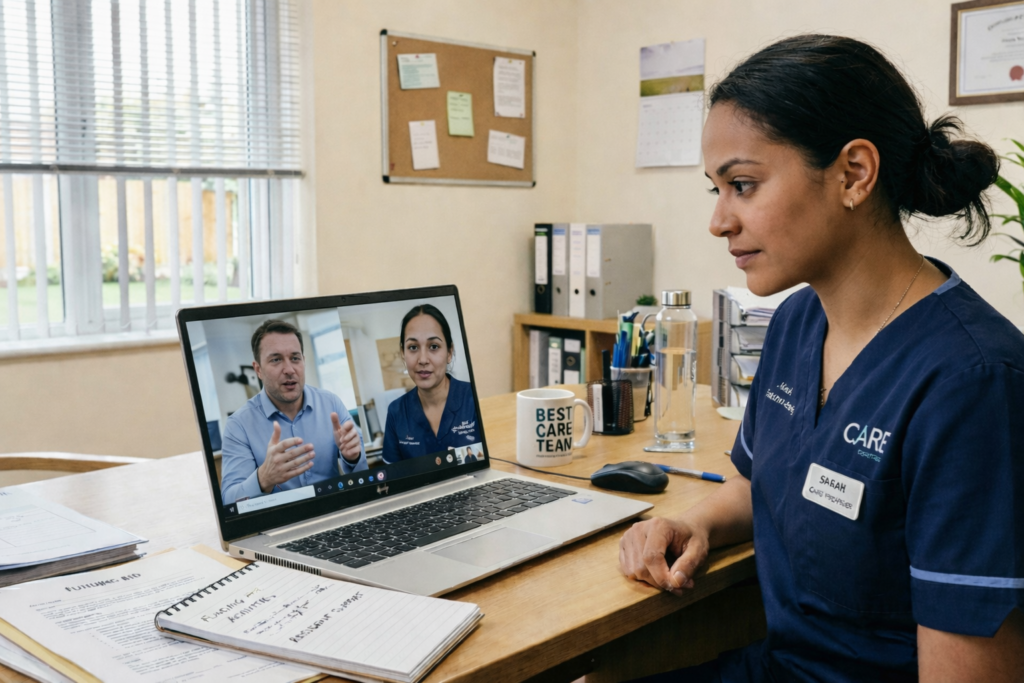
    For many social care providers, the idea of a Subject Matter Expert — or SME — call can feel unclear or time-consuming.

    In reality, the process is straightforward.

    There is no expectation for you to write responses, prepare formal answers, or structure anything in advance. The session is designed to extract the information needed for your bid in the most efficient and accurate way possible.


    What Is an SME Call?

    An SME call is a structured, conversational session between BidElevate and someone within your organisation who understands how your service operates.

    Think of it as a guided interview focused on your care delivery.

    You speak freely about your service. Questions are asked to draw out operational detail. Follow-up prompts are used to clarify and strengthen responses.

    Your role is simply to explain how your service works in practice. Your answers will be used to develop the method statements and narrative responses within your bid.


    You Do Not Need to Write Anything

    One of the most common concerns we hear is: “Do I need to prepare written answers?”

    No.

    There is no requirement to draft responses, no expectation to structure answers, and no need to use bid or technical language.

    You simply need to talk through what you do — in detail. Even if your answer feels like it is rambling, that is often where the strongest evidence comes from.


    What Does SME Mean in a Care Setting?

    A Subject Matter Expert is someone who understands the day-to-day delivery of your service. In a care setting, this is typically a Registered Manager, Service Manager, or Director with operational involvement.

    They need to be able to explain how care is delivered, how staff are managed, and how quality and compliance are maintained.

    This is not a task for someone without direct operational oversight.


    What You Do Need

    While no writing is required, two things are essential.

    Time Sessions can last up to two hours. Multiple sessions may be required depending on the complexity of the bid. NHS and more complex tenders may run across several weeks.

    Access to Information You should be able to refer to your training matrix, supervision records, KPIs and audit data, and safeguarding and incident processes. You do not need everything memorised — but you must be able to confirm details accurately when asked.


    What This Looks Like in Practice

    This is where many providers underestimate the level of detail required.

    Rather than being asked a broad question such as “Do you support your staff?” — you will be asked something more specific:

    How often is supervision conducted — monthly, quarterly? What percentage of staff are currently up to date with supervision? How is supervision recorded and quality assured?

    In a domiciliary care setting, you might be asked:

    What is your current missed call rate? How quickly are missed calls escalated and resolved? What systems do you use to monitor this in real time?

    In a supported living setting:

    How do you measure service user outcomes? Can you give a recent example where a service user progressed towards independence? What measurable changes were achieved?

    These are the types of questions that score well because they are specific, measurable, and evidence-based.


    Why This Level of Detail Matters

    Evaluators are not looking for general statements. They are scoring evidence, consistency, and measurable performance.

    For example:

    “We provide regular supervision” — scores poorly.

    “All staff receive monthly supervision, with 98% compliance tracked via digital logs and audited quarterly” — scores significantly higher.

    That level of detail can only come from you. The SME call is how we capture it.


    Why the SME Call Works

    This approach ensures that your bid reflects how your service actually operates, that key details are not missed, and that responses are tailored to what evaluators are specifically looking for.

    Without this process, bids become generic. And generic bids do not perform well in a competitive scoring environment.


    In Summary

    An SME call is not a writing task. It is a structured conversation about your service — designed to extract the detail needed to build a strong, evidence-based bid response.

    If you can set aside the time, speak openly about your service, and access key operational information — you are fully prepared.

    The expertise you use to deliver quality care every day is exactly what evaluators want to see. The SME call simply ensures that expertise is captured clearly, accurately, and in a way that scores well.

    If you have questions about the SME process or would like to discuss an upcoming tender, book a free discovery call.s the right time to apply — and if not, what to focus on first.pply.

  • What Is a Dynamic Purchasing System (DPS) ?

    A Dynamic Purchasing System (DPS) is essentially an approved supplier list used by local authorities to source care services.

    Unlike a traditional tender, a DPS stays open throughout its lifetime — meaning providers can apply to join at any point, as long as they meet the published requirements.

    Once accepted, your organisation becomes eligible to be considered for contracts as and when they arise in your area.


    How Is It Different from a Framework?

    A DPS stays open — new providers can join at any time.

    A Framework closes at a fixed point. Once it is awarded, no new providers can join until it is retendered — usually every two to four years.

    Both create approved supplier lists from which local authorities place contracts.


    How Does It Work in Practice?

    For example , a local authority sets up a DPS for domiciliary care. Providers apply, are assessed, and if accepted, join the approved list.

    When the authority needs to place a care package, it contacts providers on the list and invites them to respond. This is called a call-off or mini-competition.

    Being on the DPS does not guarantee work — local authorities award contracts at their sole discretion based on their needs at any given time. But without it, you cannot be considered at all. Acceptance is the foundation, not the finish line.


    How Long Does a DPS Last — and What Does the Process Look Like?

    DPS arrangements typically run for between two and five years — though some run considerably longer depending on the commissioning authority.

    The application process itself varies by local authority and service type, but most follow a similar pattern. You will typically be asked to complete an online questionnaire, submit supporting documentation, and in some cases respond to written questions about your service model and approach.

    Deadlines vary. Some DPS opportunities have rolling submission windows — meaning you can apply at any point. Others have periodic review windows where new applications are assessed in batches. It is important to check the specific terms of each opportunity before applying.

    Once accepted, your approval is generally valid for the duration of the DPS — provided you remain compliant and up to date with any ongoing requirements.

    For newer providers, a DPS application is also a valuable process in its own right. Going through it helps you understand what commissioners expect, identify gaps in your documentation, and build the evidence base that strengthens future applications.


    Do You Need Experience to Apply?

    Yes — in most cases. Local authorities want to see that your organisation has a track record of delivering the service you are applying to provide. This does not always mean years of operation, but it does mean demonstrable experience — whether through existing contracts, case studies, or evidence of service delivery.

    For providers who are newer or still building their evidence base, it is worth being realistic about timing. Applying before you are ready can result in rejection that is difficult to reverse. BidElevate always assesses readiness before any application proceeds.


    Which Services Use a DPS?

    DPS and framework opportunities exist across a wide and diverse range of health and social care service types. The breadth of what is commissioned this way is often broader than providers realise.

    Domiciliary Care (Home Care) Personal care, medication support, and daily living assistance for adults living at home. One of the most widely commissioned service types through DPS arrangements.

    Supported Living Regulated care and support for adults with Learning Disabilities, Autism, or Mental Health needs living in their own tenancies.

    Floating Support and Outreach Community-based support for individuals living independently — including housing support, navigation, and outreach services. Often does not require CQC registration.

    Supported Accommodation Housing alongside support for individuals requiring stability without regulated care. Providers typically need access to or management of suitable properties.

    Residential Care Care homes and nursing homes supporting older adults, including those with Dementia, Frailty, or complex health needs.

    Children and Young People — including SEND Early intervention, transition services, advocacy, and specialist support for children and young people with complex needs. Delivered by charities, CICs, and specialist providers.

    Mental Health Services Community and residential support for adults with mental health needs — including crisis support, step-down services, and long-term supported living.

    Reablement and Step-Down Care Short-term intensive support following hospital discharge, focused on restoring independence and avoiding readmission.

    NHS and Integrated Care More complex commissioning arrangements involving ICBs and NHS trusts — covering community health, housing navigation, and integrated care pathways.

    If your organisation delivers any of these services — or is looking to expand into them — there is likely a relevant DPS or framework opportunity in your area.


    Is It Right for You Right Now?

    If you are CQC registered, have your core policies in place, and have demonstrable experience delivering your service — you are likely in a position to explore DPS opportunities.

    If you are newer, still building your evidence base, or working towards a stronger CQC rating — there may be steps to take first. A DPS application submitted before you are ready is unlikely to progress and may affect future applications with the same authority.

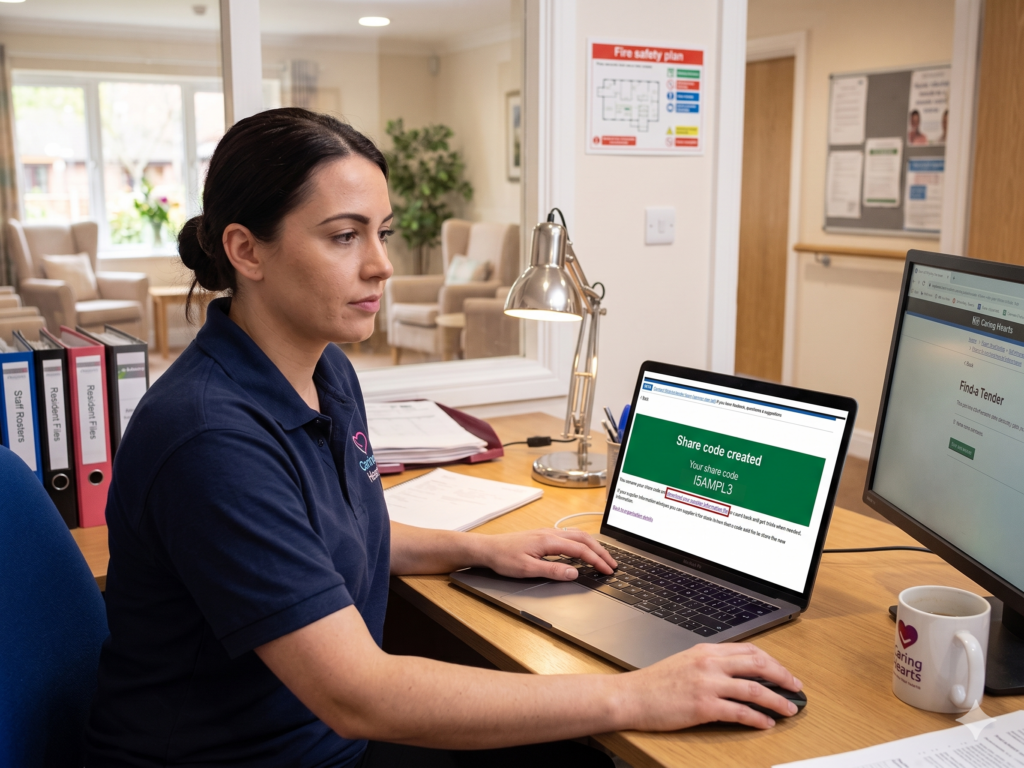
    Before applying to any DPS or portal, make sure your CDP code is registered. Read our quick guide here.


    Not Sure Where You Stand?

    Book a free 30-minute discovery call. We will give you an honest picture of whether now is the right time to apply — and if not, what to focus on first.pply.

  • How Domiciliary Care Providers Can Expand Their Services and Access More Opportunities

    For domiciliary care providers, growth can sometimes feel limited — especially when attention is focused on improving CQC ratings and maintaining day-to-day delivery.

    Many providers focus solely on traditional personal care, without realising that there are additional services they may already be capable of delivering — some of which sit entirely outside CQC regulation.

    While personal care and clinical activities are regulated, other forms of support that contribute to independence and wellbeing may not be. Understanding this distinction can open up new opportunities for providers who are ready to think more broadly about their service offer.


    Services You May Already Be Able to Deliver

    The following services do not typically require CQC registration — provided that personal care is not included as part of the delivery.

    Companionship Providing social interaction, conversation, and emotional support to reduce loneliness and isolation. For many providers, this is a natural extension of existing care relationships.

    Cleaning and Domestic Support Supporting clients with cleaning, laundry, and general household tasks to maintain a safe and comfortable living environment.

    Meal Preparation and Nutrition Support Assisting clients with preparing meals, encouraging regular eating, and supporting basic nutritional needs where required.

    Appointment Support and Escorting Helping clients attend GP, hospital, or community appointments — including accompanying them, waiting with them, and supporting communication where needed.

    Shopping and Errand Support Assisting clients with grocery shopping, collecting prescriptions, and completing day-to-day errands to support independent living.

    Transport and Travel Support Supporting clients with travel to appointments, shopping, or community activities. This may include accompanying clients on public transport or, where appropriate, using provider vehicles — subject to appropriate insurance, driver checks, and internal policies.

    Respite and Sitting Services Providing short-term support to allow family members or primary carers to take a break, whether for a few hours or longer periods.

    Floating Support, Outreach, and Navigation Support Supporting individuals to manage day-to-day life, access services, maintain tenancies, attend appointments, and build independence. This may include help with housing, benefits, community access, form-filling, signposting, and liaising with professionals.

    Floating support is particularly relevant for supported living, mental health, homelessness, learning disability, and young people’s services — but some domiciliary care providers may already have transferable skills and experience to deliver this type of support.


    An Important Caveat

    The services listed above sit outside CQC regulation only where personal care is not included as part of the delivery. If personal care forms any part of the service, CQC registration requirements apply. If you are unsure whether a specific activity falls within regulated activity, we would always recommend seeking clarification before proceeding.


    Why This Matters

    These services are often in demand and can sit alongside existing domiciliary care provision. They can also form part of a broader service offer when engaging with local authorities, the NHS, or private clients.

    For providers, this creates a genuine opportunity to think more broadly about what they are already capable of delivering — and how that capability can be positioned when approaching commissioners.

    Rather than focusing only on traditional personal care, there may be real scope to deliver additional forms of support that meet community needs and generate income — without requiring additional regulatory registration.


    How BidElevate Can Help

    Understanding what you can deliver is only part of the picture. Translating that service offer into a clear, compliant tender submission — one that meets the specific requirements of a local authority or NHS commissioner — is where many providers need support.

    BidElevate works with domiciliary care providers to identify the right opportunities, assess eligibility, and manage the full application process.

    If you are considering expanding your service offer or exploring public sector commissioning for the first time, book a free discovery call. We will give you an honest picture of what is available and whether now is the right time to apply.

  • CDP Codes Explained — What Care Providers Need to Know Before Applying for Contracts

    Why Every Care Provider Should Register Their CDP Code

    If you are preparing to engage with local authority or NHS procurement, there is one administrative step that is easily overlooked — and regularly causes avoidable delays: registering your CDP code.

    It takes approximately five minutes. But without it, you may find yourself unable to complete portal registration when a live opportunity arises.


    What Is a CDP Code?

    A CDP code is a unique identifier assigned to your organisation through the UK Government’s Central Digital Platform — the system underpinning public sector procurement in England.

    It is used across tender portals to confirm your organisation’s identity when registering for and submitting public sector contracts.

    It is worth noting that this is entirely separate from your Companies House registration and your CQC registration. Those confirm your legal and regulatory status. Your CDP code specifically supports your participation in public procurement.


    Why It Matters

    As procurement becomes increasingly centralised and digital, CDP registration is becoming a standard requirement across local authority and NHS commissioning processes.

    Without a CDP code in place:

    • You may experience delays when registering on procurement portals
    • You may be unable to complete certain submissions
    • You risk last-minute compliance issues when responding to live opportunities

    With it in place:

    • Portal registration is faster and more straightforward
    • Administrative friction during submissions is significantly reduced
    • Your organisation is positioned to respond to opportunities as they arise — not scrambling to catch up

    This is a small step. But it removes one of the most common and avoidable barriers we see care providers encounter.


    How to Register

    The process is straightforward:

    1. Access the UK Government’s Central Digital Platform
    2. Create an account or log in using your organisation details
    3. Enter the required information about your organisation
    4. Your CDP code will be issued

    In most cases this takes around five minutes to complete.


    Government Walkthrough

    The UK Government provides an official step-by-step walkthrough of the process.

    We recommend watching this before you begin:


    What We See in Practice

    At BidElevate, we regularly support providers who encounter avoidable delays because CDP registration was left until a live opportunity was already identified.

    The most common oversights are:

    • Assuming registration happens automatically as part of another process
    • Leaving it until a tender deadline is imminent
    • Uncertainty about who within the organisation is responsible for completing it

    None of these are major issues — but all of them cause unnecessary disruption at exactly the wrong moment.

    Our advice is straightforward: register your CDP code now, before you need it.


    A Final Note

    CDP registration is not a complex process. But it is an increasingly essential one for any care provider looking to access public sector contracts.

    Five minutes now saves considerably more time later.

    If you are unsure whether your organisation is fully prepared for procurement — beyond CDP registration — BidElevate offers a free eligibility assessment as part of our discovery call. We will give you a clear picture of where you stand and what steps to take next.

  • SME Calls — What to Expect and How to Prepare

    For many social care providers, the idea of a Subject Matter Expert — or SME — call can feel unclear or time-consuming.

    In reality, the process is straightforward.

    There is no expectation for you to write responses, prepare formal answers, or structure anything in advance. The session is designed to extract the information needed for your bid in the most efficient and accurate way possible.


    What Is an SME Call?

    An SME call is a structured, conversational session between BidElevate and someone within your organisation who understands how your service operates.

    Think of it as a guided interview focused on your care delivery.

    You speak freely about your service. Questions are asked to draw out operational detail. Follow-up prompts are used to clarify and strengthen responses.

    Your role is simply to explain how your service works in practice. Your answers will be used to develop the method statements and narrative responses within your bid.


    You Do Not Need to Write Anything

    One of the most common concerns we hear is: “Do I need to prepare written answers?”

    No.

    There is no requirement to draft responses, no expectation to structure answers, and no need to use bid or technical language.

    You simply need to talk through what you do — in detail. Even if your answer feels like it is rambling, that is often where the strongest evidence comes from.


    What Does SME Mean in a Care Setting?

    A Subject Matter Expert is someone who understands the day-to-day delivery of your service. In a care setting, this is typically a Registered Manager, Service Manager, or Director with operational involvement.

    They need to be able to explain how care is delivered, how staff are managed, and how quality and compliance are maintained.

    This is not a task for someone without direct operational oversight.


    What You Do Need

    While no writing is required, two things are essential.

    Time Sessions can last up to two hours. Multiple sessions may be required depending on the complexity of the bid. NHS and more complex tenders may run across several weeks.

    Access to Information You should be able to refer to your training matrix, supervision records, KPIs and audit data, and safeguarding and incident processes. You do not need everything memorised — but you must be able to confirm details accurately when asked.


    What This Looks Like in Practice

    This is where many providers underestimate the level of detail required.

    Rather than being asked a broad question such as “Do you support your staff?” — you will be asked something more specific:

    How often is supervision conducted — monthly, quarterly? What percentage of staff are currently up to date with supervision? How is supervision recorded and quality assured?

    In a domiciliary care setting, you might be asked:

    What is your current missed call rate? How quickly are missed calls escalated and resolved? What systems do you use to monitor this in real time?

    In a supported living setting:

    How do you measure service user outcomes? Can you give a recent example where a service user progressed towards independence? What measurable changes were achieved?

    These are the types of questions that score well because they are specific, measurable, and evidence-based.


    Why This Level of Detail Matters

    Evaluators are not looking for general statements. They are scoring evidence, consistency, and measurable performance.

    For example:

    “We provide regular supervision” — scores poorly.

    “All staff receive monthly supervision, with 98% compliance tracked via digital logs and audited quarterly” — scores significantly higher.

    That level of detail can only come from you. The SME call is how we capture it.


    Why the SME Call Works

    This approach ensures that your bid reflects how your service actually operates, that key details are not missed, and that responses are tailored to what evaluators are specifically looking for.

    Without this process, bids become generic. And generic bids do not perform well in a competitive scoring environment.


    In Summary

    An SME call is not a writing task. It is a structured conversation about your service — designed to extract the detail needed to build a strong, evidence-based bid response.

    If you can set aside the time, speak openly about your service, and access key operational information — you are fully prepared.

    The expertise you use to deliver quality care every day is exactly what evaluators want to see. The SME call simply ensures that expertise is captured clearly, accurately, and in a way that scores well.

    If you have questions about the SME process or would like to discuss an upcoming tender, book a free discovery call.s the right time to apply — and if not, what to focus on first.pply.